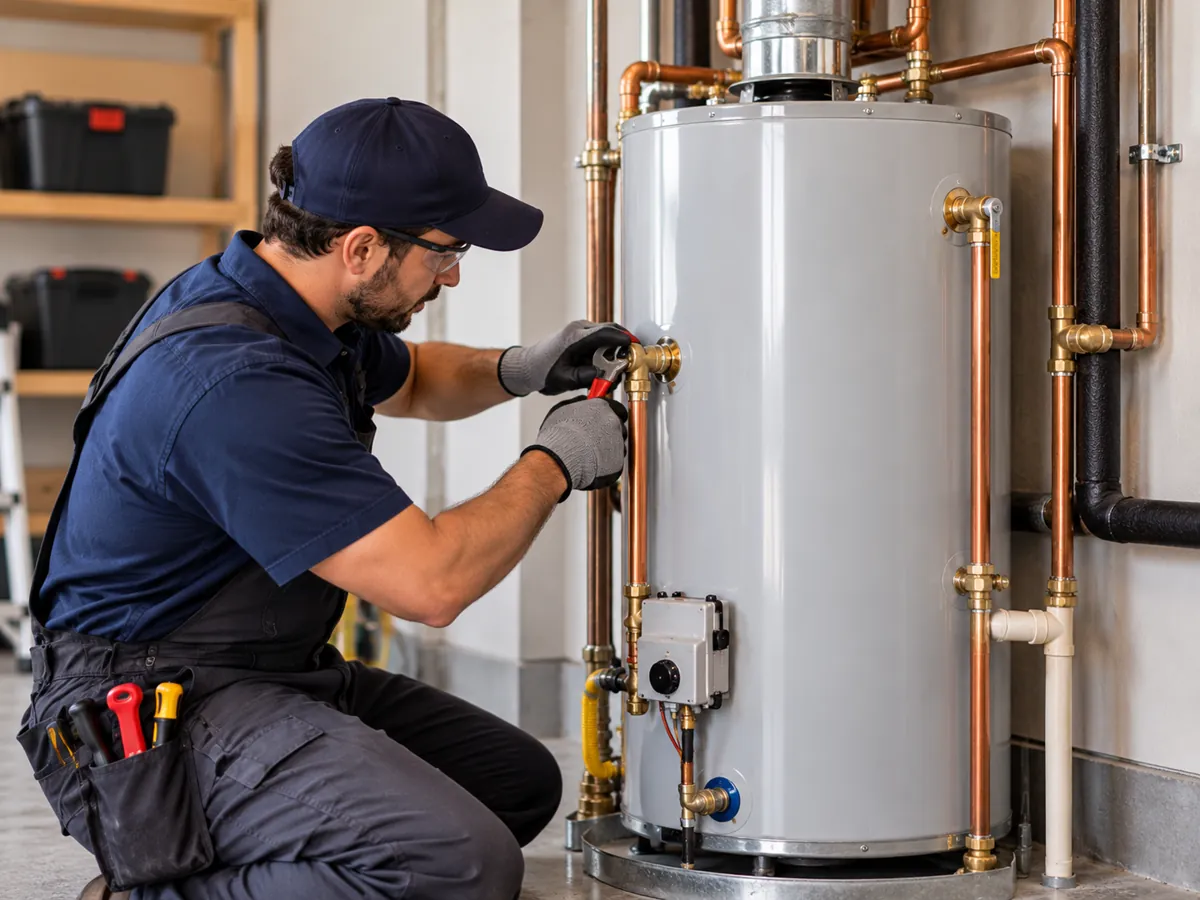
Popping or rumbling from a storage water heater can happen when water heats around sediment deposits at the tank bottom. However, a ticking, hissing, knocking or metallic sound may have a different cause, including pipe expansion, high pressure or a failing component.
Popping and rumbling
As sediment accumulates, pockets of water may heat beneath deposits and release bubbles with audible pops. Inspection and maintenance may help if sediment is the cause; persistent noises deserve diagnosis rather than repeated flushing by guesswork.
Hissing and dripping sounds
A hiss may come from a small leak onto a hot surface or from normal operation in some models. Check safely for visible moisture from fittings, the pressure-relief outlet and the surrounding floor; avoid touching hot pipes or opening the casing.
Knocking in pipes
A bang when a valve closes can be water hammer elsewhere in the plumbing system, rather than a problem inside the heater. An experienced plumber can examine supply pressure and pipe support.
When to stop and call
Shut down the system according to its manual and request help if you notice a significant leak, unusual smell, scorching, smoke or repeated safety shutdown. Leave immediately and call the gas utility or emergency services if you smell gas.
Related services and next steps
Find local information about tankless repair · water heater replacement · maintenance ·
A practical description for the technician
Note whether the noise happens when a hot faucet opens, during active heating, immediately after a burner turns off, or when another appliance runs. Describe whether it sounds like popcorn, sharp knocking, dripping, hissing or a vibrating motor. If possible, record the sound from a safe distance without approaching hot, wet or electrical equipment.
Why diagnosis matters
Water heating equipment includes several mechanisms that can make sound. Treating every popping noise as sediment may overlook pipe movement, high water pressure or abnormal combustion. Diagnosis should match the sound pattern with the system type and observations, rather than relying on the noise alone.